When Stitches Spoke Louder Than Words: The Secret Language of Embroidery
Quote: "When voices were silenced, stitches spoke, carrying hidden truths, quiet rebellions, and the untold dreams of women across time." – Anonymous
When Stitches Spoke Louder Than Words: The Secret Language of Embroidery
In the quiet rhythm of a needle passing through fabric lies a story, not just of colour and craft, but of hidden voices. Long before social media, or even the freedom to speak openly, women found a way to express themselves with thread.
A Silent Art with a Secret Code
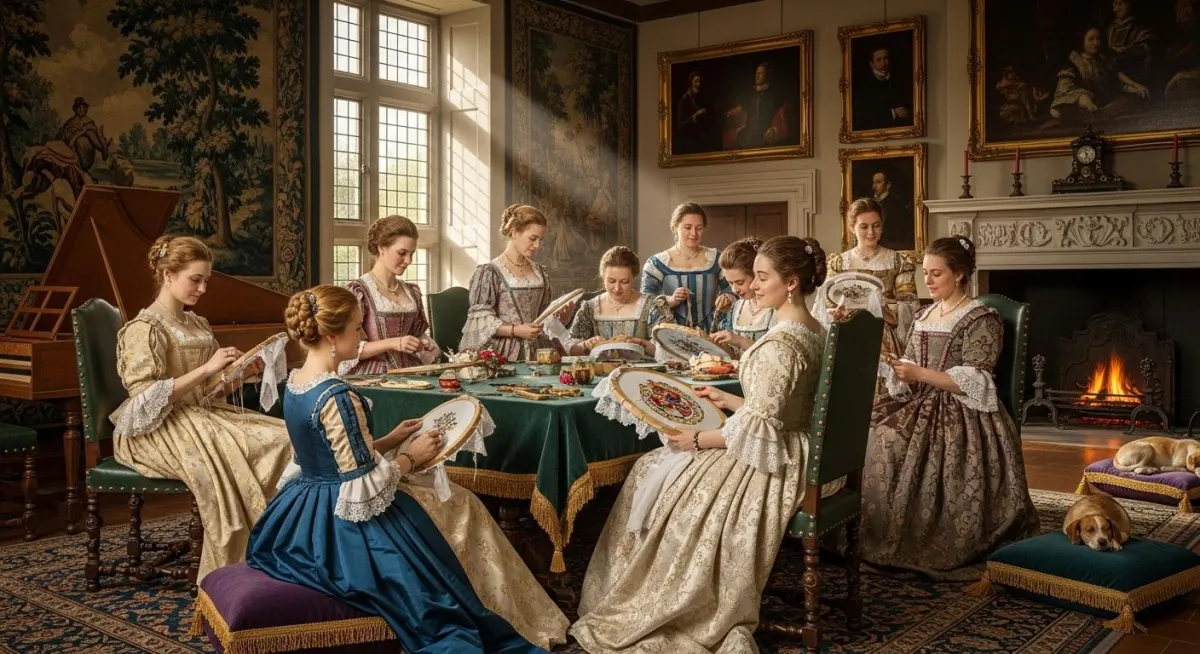
In 16th- and 17th-century Europe, women were often expected to be seen but not heard. Their role was to manage the household, raise children, and uphold a certain standard of modesty and obedience. Speaking too freely about love, desire, politics, or ambition could easily be frowned upon.
But embroidery was different. It was considered a proper pastime for a lady graceful, domestic, and entirely respectable. That respectability gave women an unexpected freedom: within their needlework, they could hide symbols, emotions, and opinions that couldn’t be spoken aloud.
The Meaning Behind the Motifs
Pomegranates symbolised fertility and eternal life, a quiet hope for a future or a family.
Carnations represented love and devotion, often stitched into samplers or gifts for a beloved.
Oak leaves and acorns stood for strength and perseverance, a discreet nod to inner courage.
Birds might mean freedom or longing for travel beyond the confines of the home.
Vines and ivy whispered loyalty and faithfulness, their intertwining forms echoing human connection.
Some embroidery even drew from heraldic or religious imagery, blending traditional symbolism with deeply personal meaning.
A Conversation Between Women
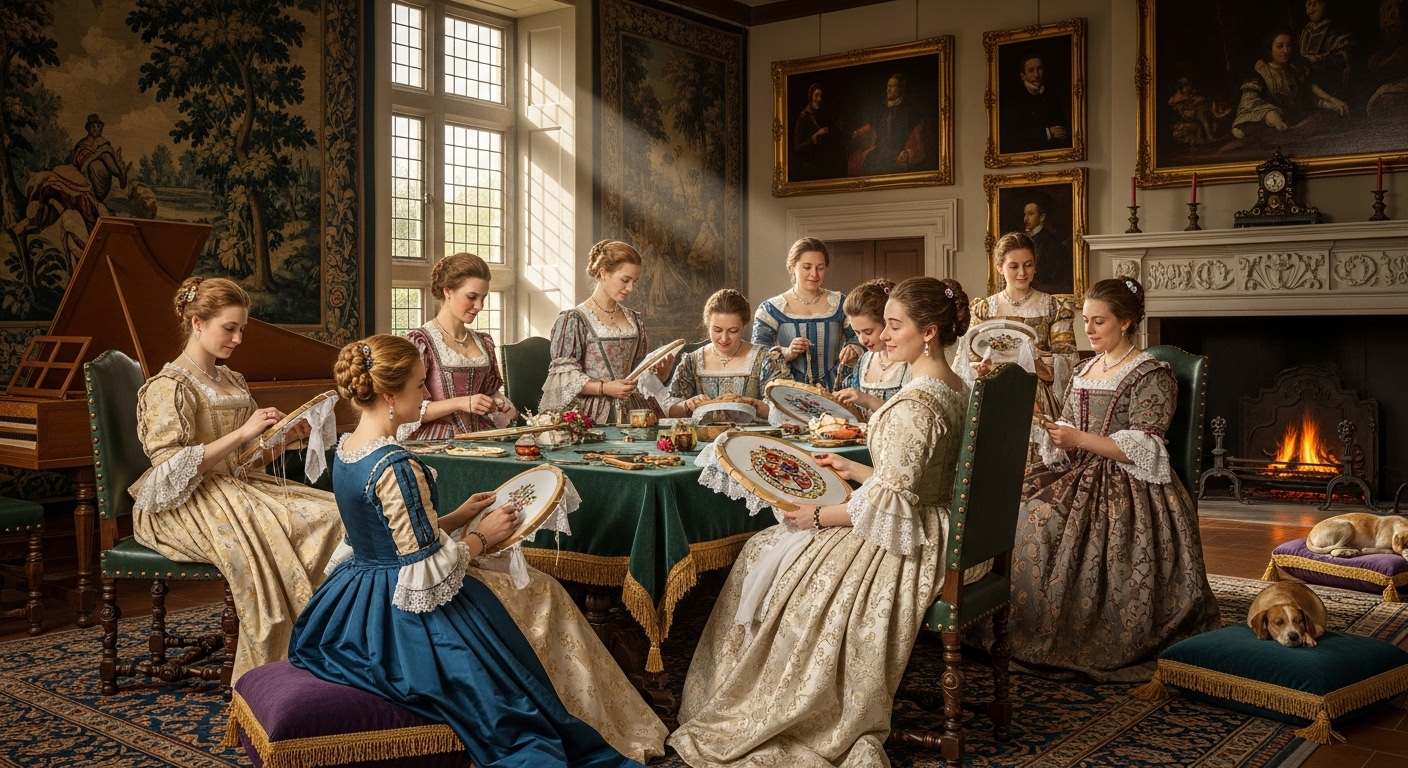
In many households, girls learned embroidery from their mothers or grandmothers. Stitch by stitch, they not only learned technique but also the language of symbols. A finished piece could be admired for its beauty by men and visitors, but only women within that circle might understand the real message woven between the threads.
Imagine the quiet satisfaction of expressing what society forbade, an unspoken sisterhood carried out in silk and linen
Echoes of the Past in Modern Stitching
Today, we don’t need to hide our feelings behind thread and fabric (thankfully!). Yet the tradition continues in a different way. Many stitchers still choose colours or motifs that reflect their emotions, calm blues, fiery reds, protective greens, sometimes without even realising they’re doing it.
In that sense, embroidery is still a language, one that connects centuries of women who stitched their thoughts, fears, and hopes into something tangible.
Happy Stitching!



